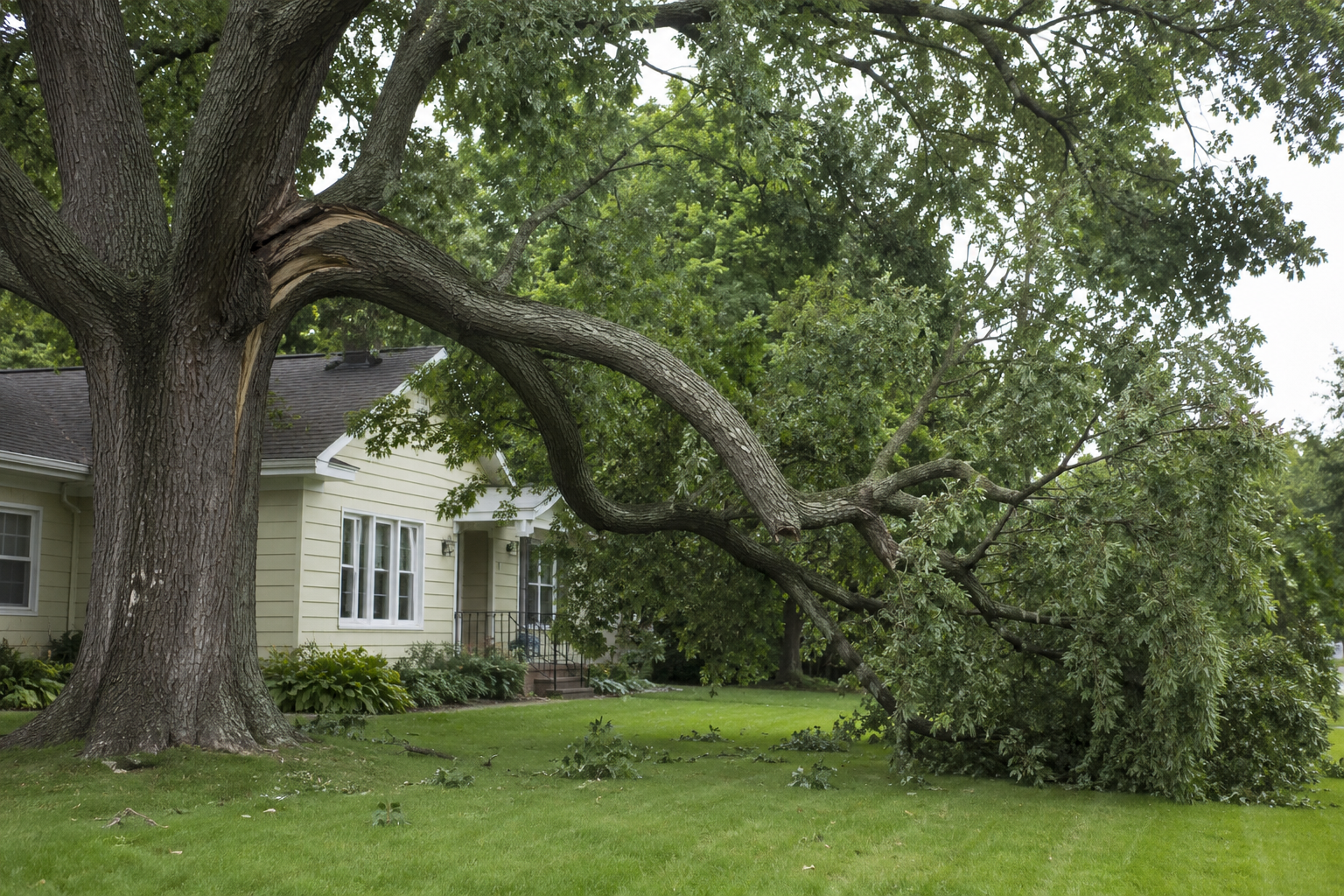

Can Tree Growth Slowly Damage Retaining Walls and Patios?
September 30, 2026
The Damage Usually Starts Long Before Homeowners Notice It
A retaining wall rarely collapses overnight. Patio pavers usually do not suddenly lift several inches in a single season either.
Most tree-related hardscape damage develops slowly enough that homeowners stop noticing the changes while they are happening.
At first, a section of the patio feels slightly uneven. A retaining wall develops a thin crack near one corner. One paver shifts upward a little more after heavy rain. Then several years later, the entire area begins separating, leaning, or sinking enough that the structural movement becomes impossible to ignore.
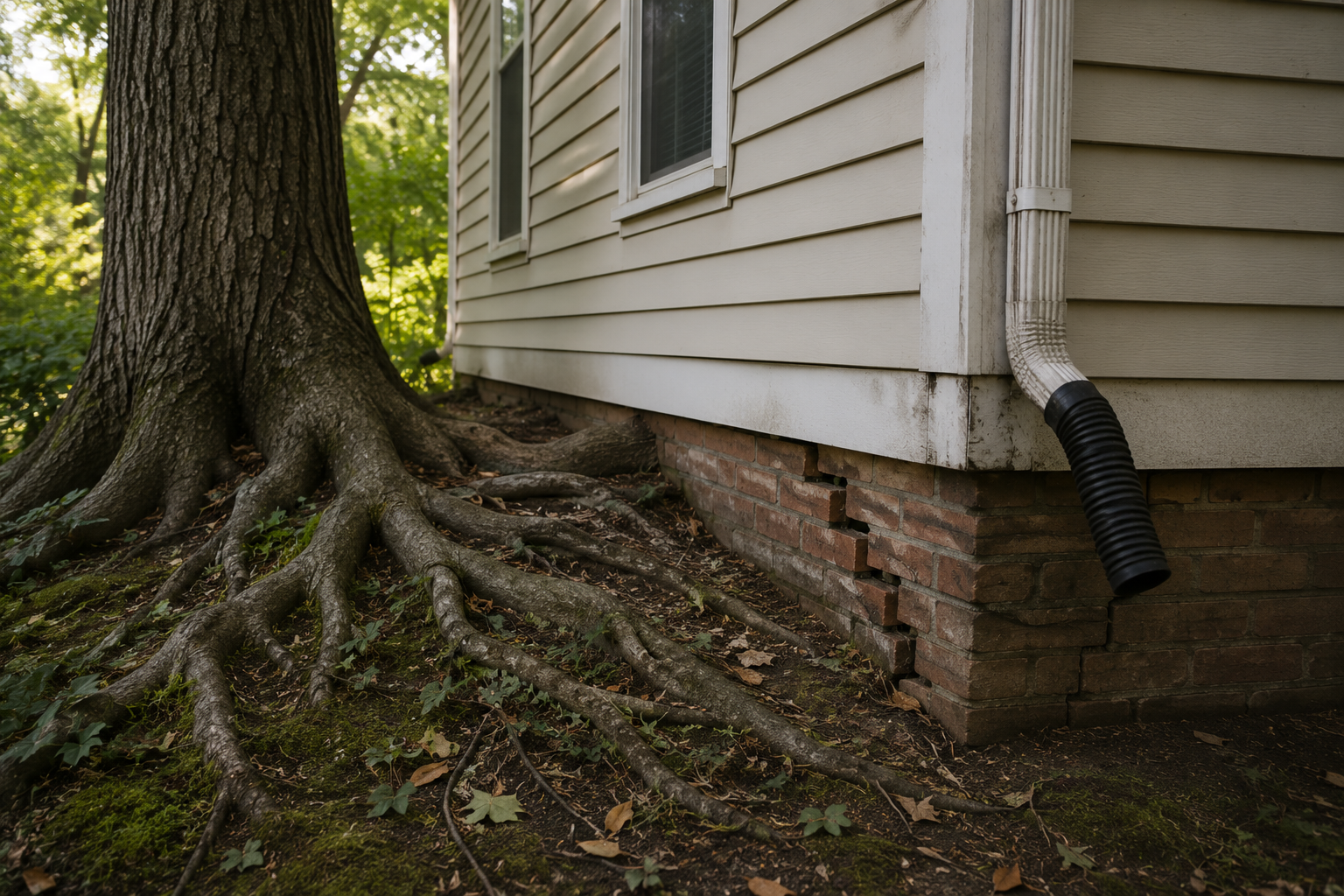
In many Huntersville, North Carolina properties, mature trees are planted close to patios, walkways, driveways, and retaining walls because the landscaping originally looked balanced when the trees were young. What homeowners often underestimate is how dramatically root systems expand as trees mature.
The tree above ground may seem manageable. Underground, the root system may already be interacting with nearby structures in ways homeowners cannot see yet.
Tree Roots Do Not Grow Randomly
Roots spread with purpose.
Their job is to search for:
- Water
- Oxygen
- Nutrients
- Structural stability
As the tree grows larger above ground, the root system expands outward to support that increasing size and weight.
Mature Trees Need More Underground Space
Many homeowners picture roots growing deep below the tree like an upside-down mirror of the canopy.
In reality, most structural roots spread outward much wider than people expect, often staying relatively close to the soil surface.
This matters because shallow expanding roots are more likely to interact with nearby hardscape features.
Roots Follow Moisture and Soil Conditions
Roots naturally move toward areas where conditions support growth.
That can include:
| Attraction Source | Why Roots Move Toward It |
|---|---|
| Retaining wall drainage | Moisture collects nearby |
| Patio edges | Soil gaps allow expansion |
| Irrigated landscaping | Consistent water supply |
| Cracks in concrete | Easier growth paths |
| Loose backfill soil | Less resistance underground |
Over time, these growth patterns can place gradual pressure against nearby structures.
Retaining Walls Often Experience Pressure From Multiple Directions
Retaining walls already manage significant force from surrounding soil.
When tree roots expand nearby, the pressure increases further.
Roots Can Push Against the Wall Structure
As roots thicken over time, they may begin pressing directly against retaining wall materials.
This can contribute to:
- Bowing walls
- Horizontal cracking
- Shifting blocks
- Joint separation
- Drainage disruption
The movement is usually slow, which is why homeowners often miss the early stages.
Water Problems Make the Situation Worse
Root systems and drainage issues often work together.
If water begins collecting behind the retaining wall because roots interfere with drainage flow, hydrostatic pressure may increase alongside root expansion.
This combination creates additional stress on the structure during heavy rain periods common throughout North Carolina.
Patios and Pavers Are Vulnerable to Root Expansion
Patios may appear solid from above, but many surfaces rely on compacted base layers underneath that can shift over time.
Roots Can Lift Sections Unevenly
As roots enlarge beneath patios or pavers, they may slowly raise portions of the surface upward.
Homeowners often notice:
- Uneven pavers
- Raised concrete edges
- Tripping hazards
- Gaps between stones
- Drainage pooling
These problems become more common as mature roots continue thickening each year.
Surface Materials React Differently
Different patio materials respond to root pressure differently.
For example:
- Pavers may separate or lift individually
- Concrete slabs may crack
- Natural stone may shift unevenly
- Brick patios may buckle gradually
The extent of the movement often depends on both root growth and the original construction method beneath the patio.
Certain Trees Create More Aggressive Root Expansion
Not every tree affects hardscapes the same way.
Some species naturally develop larger or more aggressive root systems as they mature.
Large Shade Trees Need Extensive Support Systems
Mature trees with broad canopies require significant root spread for stabilization.
This is especially true for large hardwoods commonly found throughout Huntersville neighborhoods.
As these trees age, root expansion may eventually reach nearby patios, retaining walls, sidewalks, and driveways.
Fast-Growing Trees Can Create Problems Earlier
Rapid-growth species often expand both above and below ground more aggressively during early years.
This can accelerate hardscape interaction before homeowners realize how extensive the root system has become.
Soil Conditions Influence How Roots Behave
Root movement is heavily affected by what is happening underground around the structure.
Compacted Soil Redirects Root Growth
When soil becomes heavily compacted, roots may stay closer to the surface where oxygen and moisture remain more accessible.
Surface-oriented roots are more likely to interact with patios and retaining walls.
Erosion Changes Structural Stability
Heavy rain and shifting soil conditions may expose roots or alter how pressure distributes beneath retaining walls.
Huntersville properties with sloped yards often experience changing soil movement patterns after repeated storms.
The Tree May Still Look Completely Healthy
One reason homeowners overlook root-related damage is because the tree itself often appears healthy and attractive.
The canopy may still provide:
- Shade
- Privacy
- Visual appeal
- Cooling benefits
Meanwhile, underground expansion continues affecting nearby structures gradually over many years.
This creates difficult decisions because homeowners may not want to remove mature trees that still appear healthy overall.
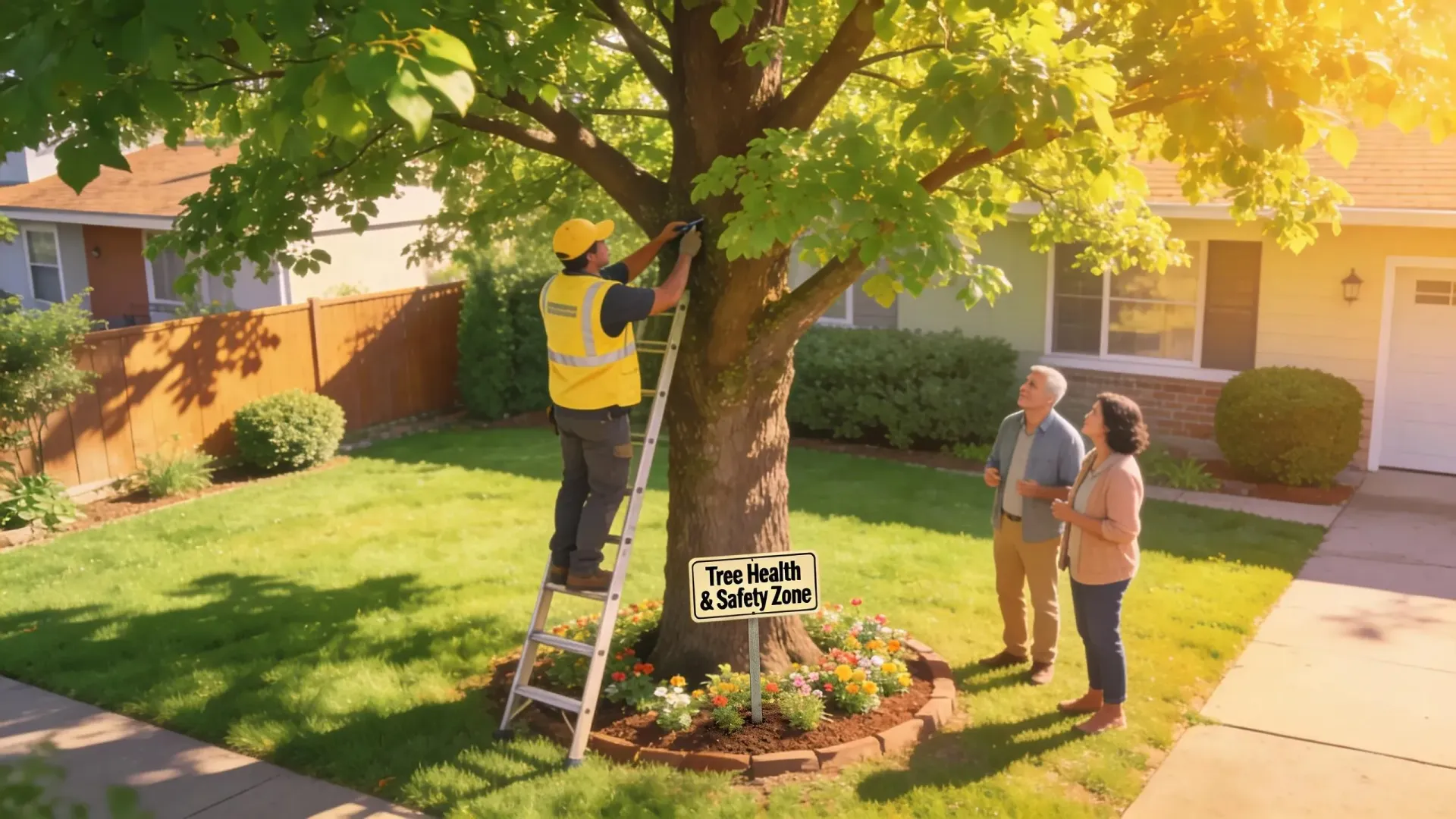
Arborists Evaluate More Than the Visible Damage
When hardscape movement appears near trees, arborists look beyond the crack or lifted section itself.
Root Location Matters
Not every nearby tree is automatically responsible for the damage.
Arborists evaluate:
- Root direction
- Tree species
- Distance from structures
- Soil movement patterns
- Drainage conditions
Sometimes multiple contributing factors exist together rather than one single cause.
Tree Preservation May Still Be Possible
In certain situations, solutions may involve:
- Root pruning
- Barrier systems
- Structural repairs
- Drainage correction
- Selective canopy management
The goal is often balancing tree preservation with long-term property protection.
Warning Signs Homeowners Should Not Ignore
Small changes around patios and retaining walls sometimes indicate larger underground movement already underway.
The following symptoms deserve closer attention:
| Warning Sign | Possible Concern |
|---|---|
| Leaning retaining walls | Root or soil pressure |
| Raised patio sections | Expanding surface roots |
| Widening cracks | Structural shifting |
| Pooling water | Drainage interference |
| Separating pavers | Soil displacement |
| Exposed large roots | Expanding root growth |
The earlier these issues are evaluated, the easier it usually becomes to manage both the tree and surrounding structures.
Frequently Asked Questions About Tree Roots and Hardscapes
Can tree roots damage retaining walls?
Yes. Expanding roots may place pressure on retaining walls and contribute to shifting or cracking over time.
Do roots grow underneath patios?
They can. Surface-oriented roots may eventually lift pavers, concrete, or stone surfaces.
Are some trees more damaging to hardscapes than others?
Yes. Larger and faster-growing species often develop wider root systems that interact more aggressively with nearby structures.
Can retaining wall drainage affect root growth?
Yes. Moisture near retaining walls may attract roots toward the area.
Does root damage happen quickly?
Usually not. Most root-related hardscape damage develops gradually over several years.
Conclusion
Tree growth can slowly damage retaining walls and patios because expanding root systems place increasing pressure on surrounding structures over time. Moisture conditions, soil movement, drainage patterns, and tree size all influence how roots interact with hardscape features beneath the surface.
In Huntersville, North Carolina, mature trees are a major part of many residential landscapes, but their long-term root expansion can eventually affect patios, retaining walls, walkways, and other outdoor structures if growth patterns are not monitored carefully. Companies like Clark's Tree Express
help homeowners evaluate root-related concerns, assess tree impact near structures, and make informed decisions that balance both property protection and tree health.