
When Can Tree Weight Become Dangerous for Large Limbs?
July 30, 2026
A Limb Does Not Need to Be Dead to Fail
One of the biggest misconceptions homeowners have about trees is assuming dangerous limbs always look unhealthy first.
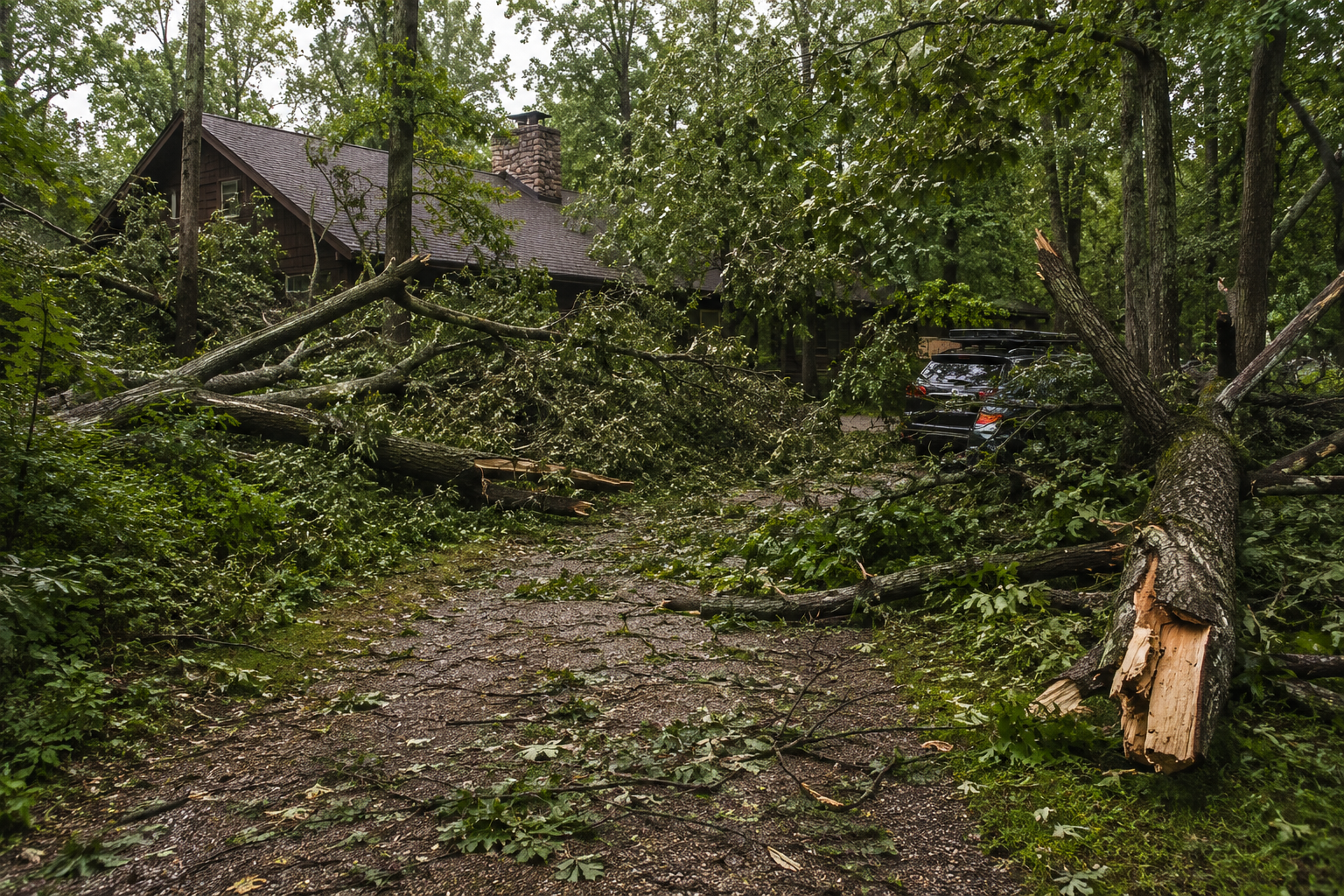
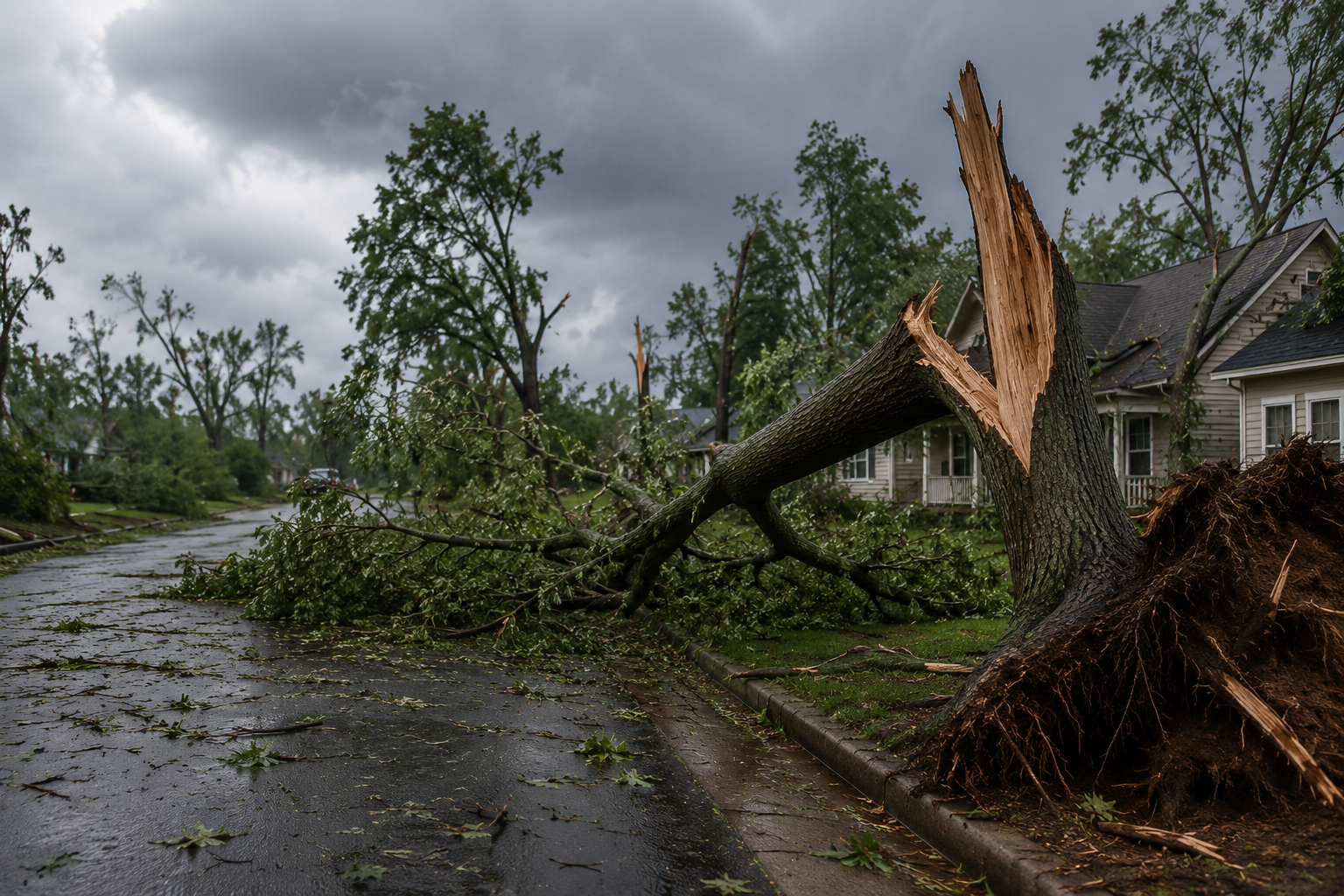
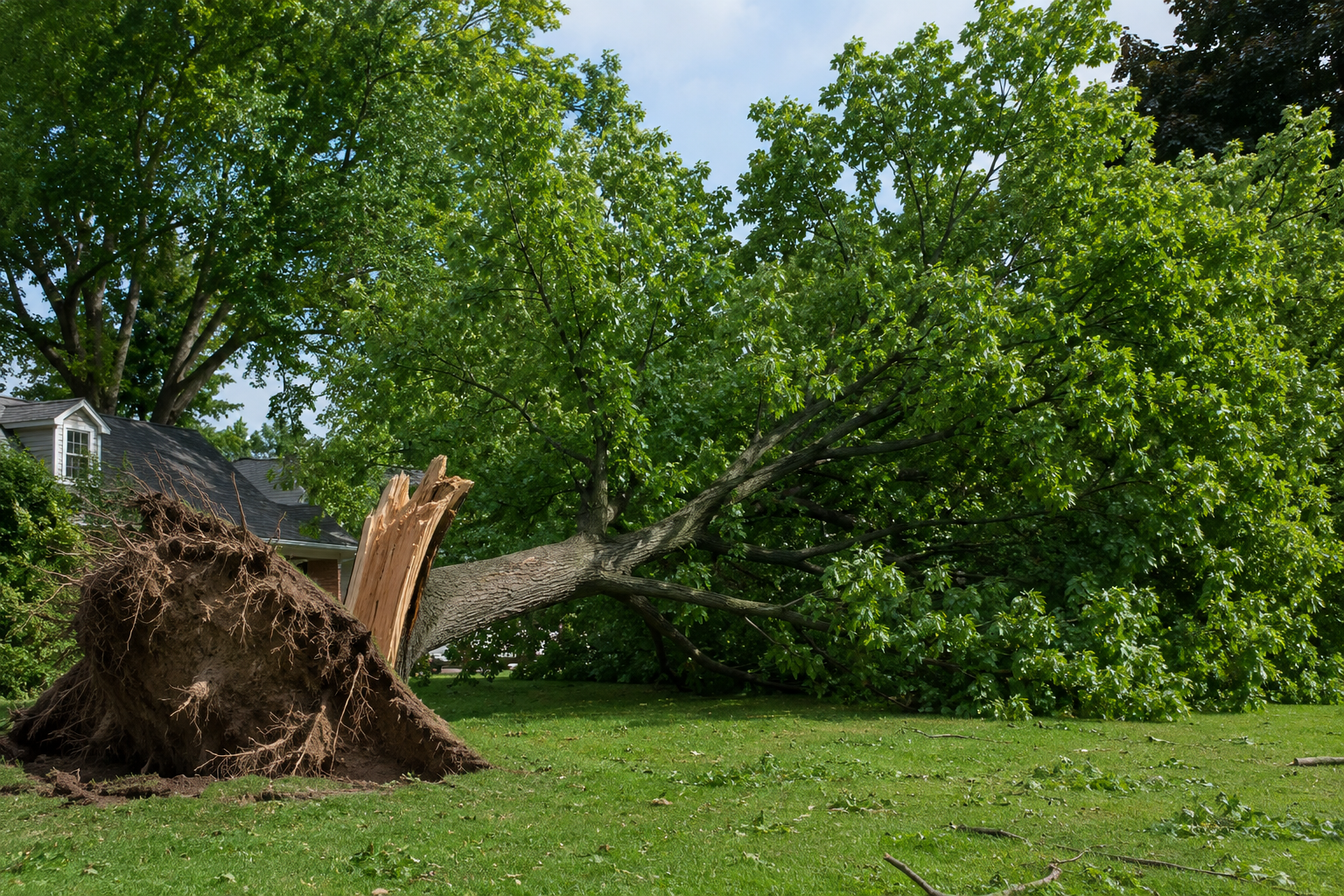
In reality, some of the heaviest branches that fail during storms are still full of leaves and appear completely alive beforehand. The limb may have been growing outward for decades without obvious problems until one summer storm, heavy rainfall, or sudden crack changes everything within seconds.
Large limbs fail because of physics as much as biology.
As branches extend farther away from the trunk, they become heavier, longer, and more difficult for the tree to support safely. Add moisture, wind pressure, or structural weakness, and the weight load can eventually exceed what the wood fibers are capable of handling.
In Huntersville, North Carolina, mature hardwood trees commonly spread across roofs, driveways, patios, and neighboring properties. That means large limb failures often become property damage events rather than isolated tree problems.
Limb Weight Increases Gradually Over Time
Most dangerous branches do not become hazardous suddenly.
They become heavier year after year while homeowners grow accustomed to seeing them in the same position.
Long Horizontal Limbs Carry Enormous Stress
Branches extending outward horizontally place continuous leverage pressure on the tree.
As they grow, several things happen simultaneously:
- Limb length increases
- Foliage density expands
- Rainwater collects on leaves
- Wind resistance grows
- Structural stress multiplies
The farther the branch extends from the trunk, the more force develops at the attachment point where the limb connects to the tree.
That connection becomes critical during storms.
Mature Trees Often Hide the Problem Well
Many older trees in Huntersville neighborhoods developed naturally over decades without regular structural pruning.
Large limbs may appear stable because:
- The canopy still looks healthy
- Leaves remain green
- The branch has “always been there”
- No major cracking is visible from below
But internal stress can still build quietly inside the wood fibers long before visible failure occurs.
Storms Add Weight Faster Than People Realize
A branch that appears stable during dry weather may behave very differently during a storm.
Rainwater Makes Limbs Significantly Heavier
Heavy rain adds substantial weight across the canopy.
Water accumulates on:
- Leaves
- Small branches
- Moss growth
- Dense canopy sections
This additional load increases downward pressure on already stressed limbs.
The branch is no longer supporting only its own natural weight. It is now carrying storm weight as well.
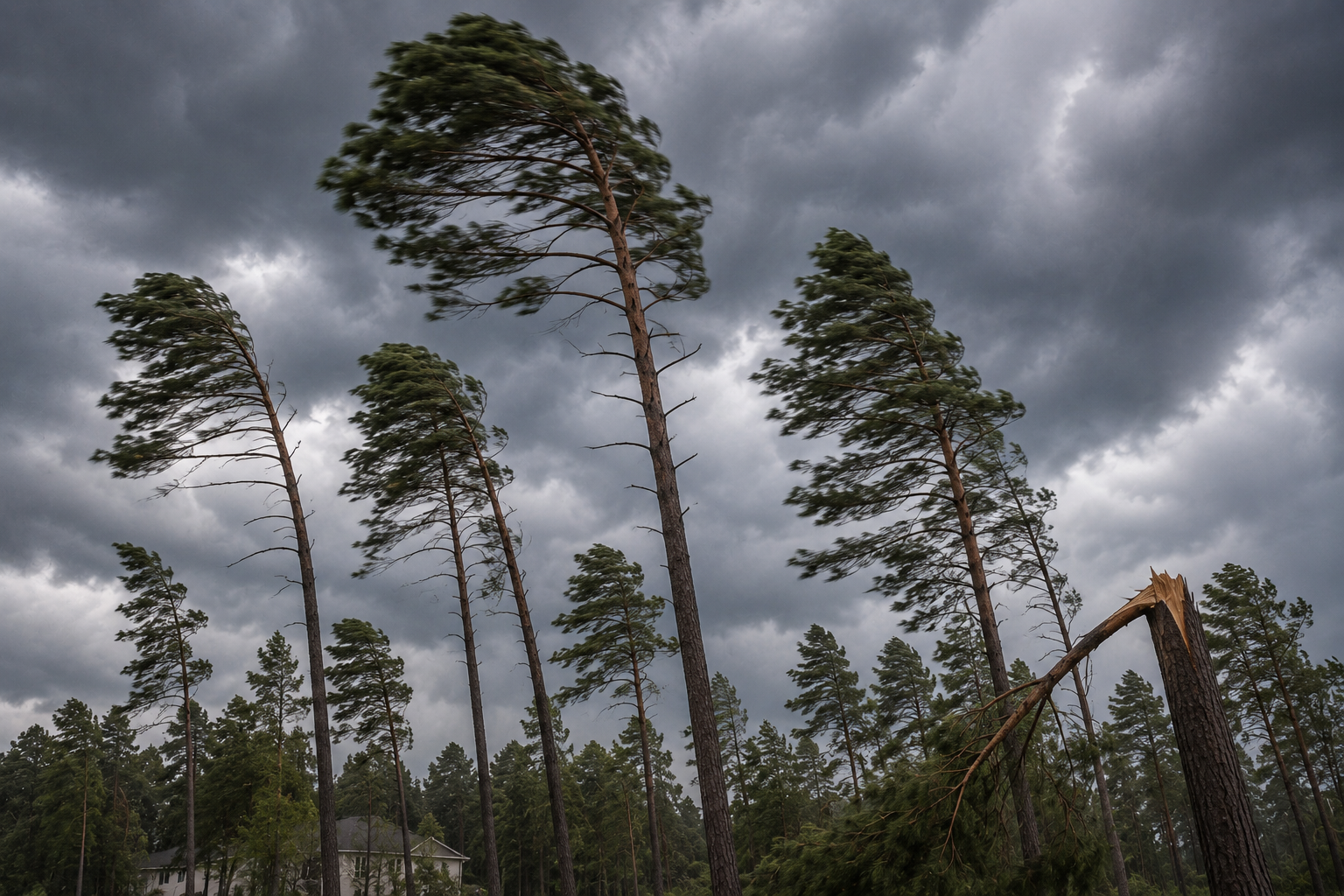
Wind Creates Sideways Pressure
Wind does not simply push downward.
Large limbs twist, flex, and bend laterally during strong gusts. This movement creates stress in multiple directions at once.
The following conditions usually increase storm vulnerability:
| Limb Condition | Why Risk Increases |
|---|---|
| Long horizontal spread | Greater leverage force |
| Dense leaf coverage | More wind resistance |
| Uneven canopy growth | Imbalanced weight distribution |
| Heavy end-weight | Increased bending stress |
| Previous storm damage | Reduced structural strength |
When repeated storms hit Huntersville during hurricane season or severe summer weather, these stresses compound over time.
Weak Attachment Points Increase Failure Risk
Not every branch connects to the trunk equally well.
Some limbs develop structurally weaker attachment unions that become more vulnerable as weight increases.
Multiple Trunks Can Create Weak Junctions
Trees with codominant stems — where two large trunks grow side by side — often develop included bark between them.
Included bark prevents strong wood connection from forming properly.
As the stems enlarge, pressure builds internally until splitting becomes more likely under heavy loads.
Large Limbs Sometimes Outgrow Their Support
A branch may continue expanding outward even though the attachment point near the trunk is no longer structurally strong enough to support the increasing weight safely.
This problem often develops slowly over many years.
Internal Decay Can Make Heavy Limbs Unpredictable
A branch may fail not because it is too large alone, but because decay has weakened the wood supporting it internally.
Healthy Leaves Do Not Guarantee Strong Wood
A limb can continue producing foliage while internal decay spreads through the branch union or core wood.
This is one reason large limb failures often surprise homeowners.
The outside of the branch may still look healthy while hidden deterioration weakens its structural capacity.
Arborists Look for Specific Warning Signs
Certain symptoms may suggest dangerous weakening inside large limbs.
These include:
- Cracks near attachment points
- Cavities in major branches
- Bark splitting
- Mushrooms or fungal growth
- Sagging limb posture
- Previous branch failures nearby
Some of these signs appear subtly at first, especially in mature shade trees with dense canopies.
Certain Tree Species Tend to Develop Heavy-Limb Problems More Often
Different species handle branch weight differently depending on wood structure and growth habits.
Fast-Growing Trees Sometimes Develop Weaker Wood
Rapid growth can create limbs that become oversized before the wood fully strengthens structurally.
This may increase vulnerability during storms or under excessive weight loads.
Mature Hardwoods Often Develop Massive Canopies
In Huntersville, mature hardwood species frequently develop broad heavy limbs extending over homes and yards.
Without periodic structural pruning, these branches may eventually carry more weight than homeowners realize.
Overextended Limbs Can Affect More Than the Tree
Large branch failures become especially dangerous when the limb hangs above active parts of the property.
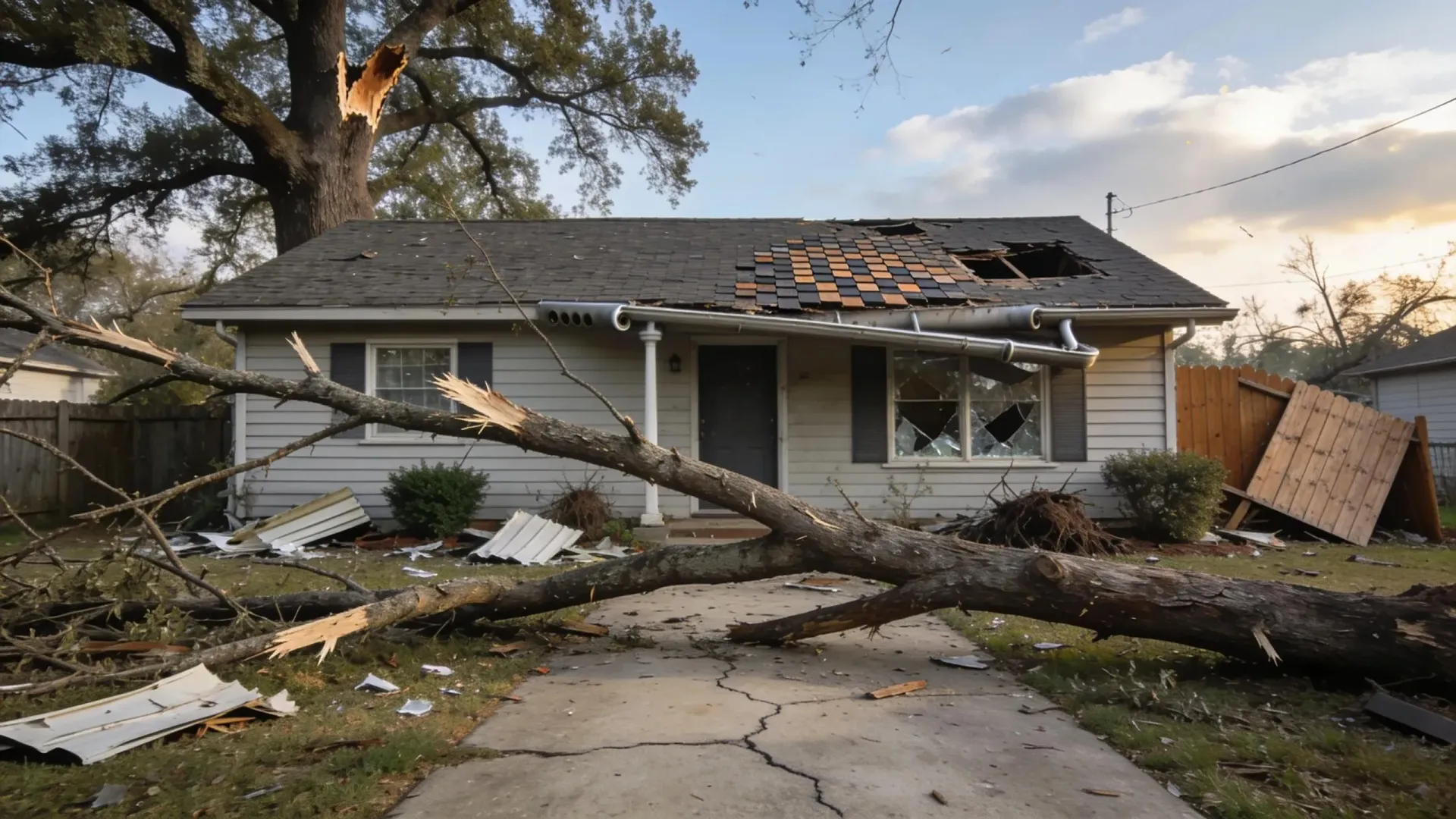
Rooflines Are Common Impact Areas
Heavy limbs frequently fail onto:
- Roofs
- Gutters
- Chimneys
- Porches
- Attached garages
Even partially fallen branches can cause expensive structural damage because of the weight involved.
Limbs Above Gathering Areas Create Safety Risks
Homeowners should pay closer attention to large branches extending above:
- Driveways
- Patios
- Play areas
- Outdoor kitchens
- Walkways
The larger the branch, the greater the injury risk if failure occurs unexpectedly.
Arborists Evaluate More Than Branch Size Alone
A large limb is not automatically dangerous.
Arborists assess how the branch behaves structurally within the overall tree.
They Look at Weight Distribution
Uneven canopy loading often matters more than branch diameter itself.
A long unbalanced limb carrying excessive end-weight may create higher failure risk than a shorter thicker branch with better support.
Structural Pruning Helps Reduce Stress
In some situations, selective pruning helps reduce excessive leverage and canopy weight before failure occurs.
The goal is not simply making the tree smaller. Proper pruning redistributes weight more safely throughout the canopy structure.
What Homeowners Should Watch For
Some warning signs deserve attention before the next major storm arrives.
New Sagging or Drooping
A branch changing position noticeably may indicate increasing structural weakness.
Cracking Sounds During Wind
Audible cracking often signals stress movement inside the limb or attachment union.
Repeated Small Branch Failures
Frequent minor limb drops sometimes suggest larger structural stress developing higher in the canopy.
Sudden Bark Separation
Splitting bark near major branch unions may indicate the connection is weakening internally.
Frequently Asked Questions About Heavy Tree Limbs
Can healthy tree limbs still fall?
Yes. Healthy-looking limbs may still fail from excessive weight, structural weakness, or storm stress.
Why do large branches break during storms?
Rain, wind pressure, and added canopy weight create forces that overstress weakened or overloaded limbs.
Are long horizontal branches more dangerous?
They can be because longer limbs create greater leverage and structural stress at the attachment point.
Does pruning help reduce limb failure risk?
Proper structural pruning may help redistribute canopy weight and reduce stress on vulnerable limbs.
Should cracked limbs be inspected immediately?
Yes. Cracks near major branches or trunk unions may indicate structural instability.
Conclusion
Tree weight becomes dangerous for large limbs when branch growth, storm stress, structural weakness, and environmental pressure combine over time. Even healthy-looking branches can eventually fail if the limb becomes too heavy for its attachment point or internal structure to support safely.
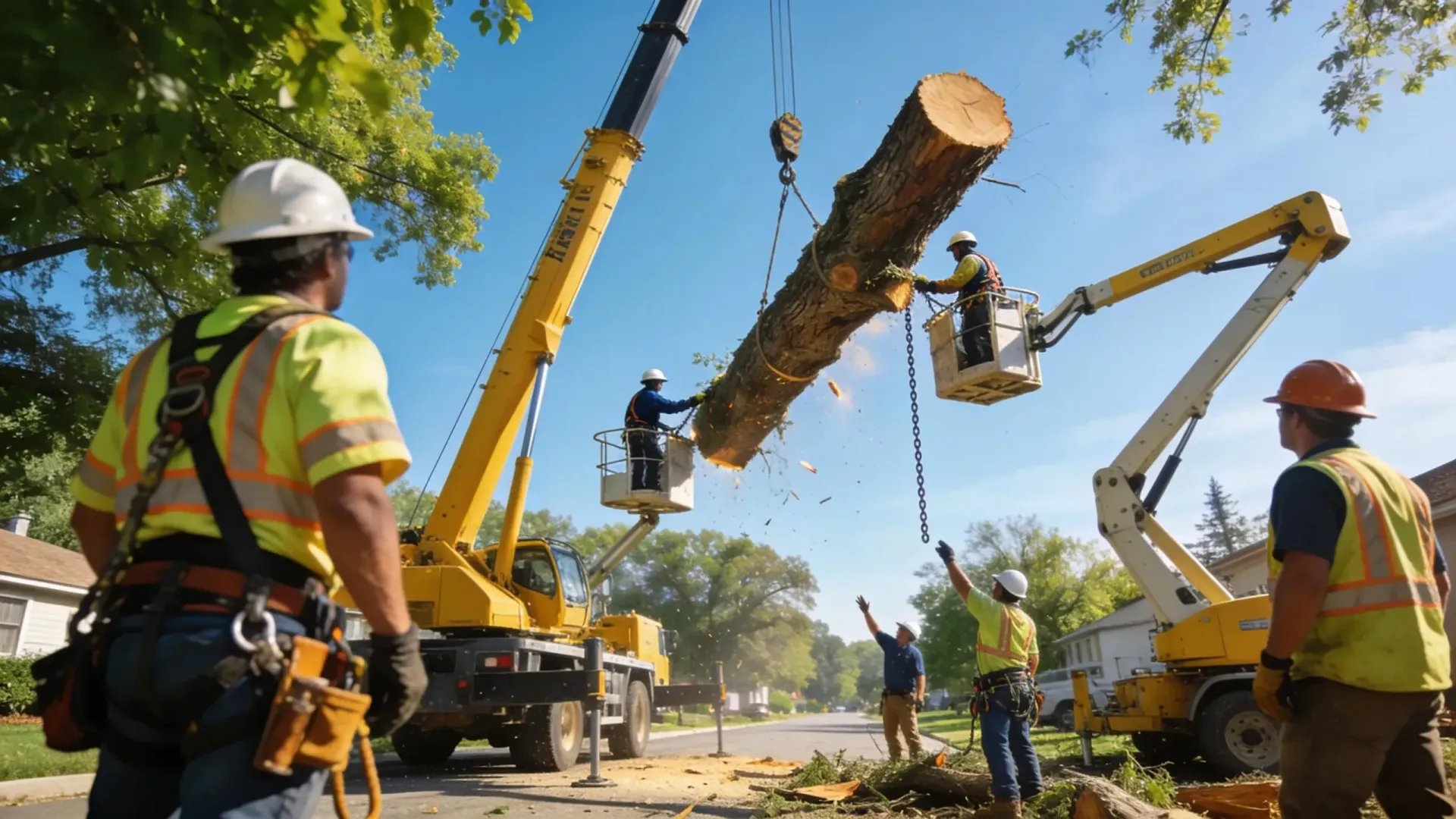
In Huntersville, North Carolina, mature shade trees often extend over homes, patios, and neighboring properties, making large limb failures especially important to monitor before severe weather arrives. Companies like Clark's Tree Express help homeowners evaluate canopy structure, identify overloaded limbs, and manage tree weight before hidden stress turns into major property damage.